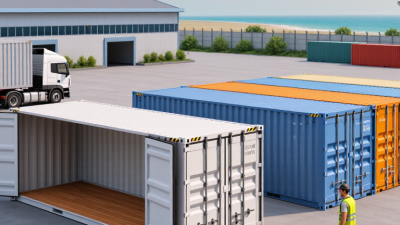
Global trade depends on containers that protect goods between factories, ports, warehouses, and customers. The right Shipping And Storage Containers can reduce handling damage, improve inventory control, and support more predictable delivery planning. Yet container selection is rarely simple. A low purchase price may hide corrosion, weak flooring, poor door seals, or expensive inland transport.
UN Trade and Development reported that maritime transport carries more than 80% of global merchandise trade by volume. Its Review of Maritime Transport also highlights continuing pressure from route disruptions, port congestion, and changing freight costs. These conditions make container quality and availability commercial priorities, not minor purchasing details. A container may look sound outside while moisture marks appear beneath the plywood floor. Small gaps around the doors can matter during long ocean voyages.
The World Bank’s 2023 Logistics Performance Index shows that reliable logistics depend on infrastructure, shipment tracking, customs efficiency, and delivery timeliness. Container decisions should therefore match the complete supply chain. Consider cargo weight, internal dimensions, ventilation, stacking requirements, handling equipment, and storage duration. Think beyond the photograph.
This guide examines ten practical container options for global buyers, including standard, high-cube, refrigerated, open-top, flat-rack, and specialized storage models. Each option has strengths and limitations. Some recommendations may require closer review because regional availability, inspection standards, and transport costs vary widely. That is the honest part. Buyers should verify condition reports, certification documents, dimensions, and supplier history before committing capital. The best choice is not always the newest container. It is the one that fits the cargo, route, climate, and operating reality.
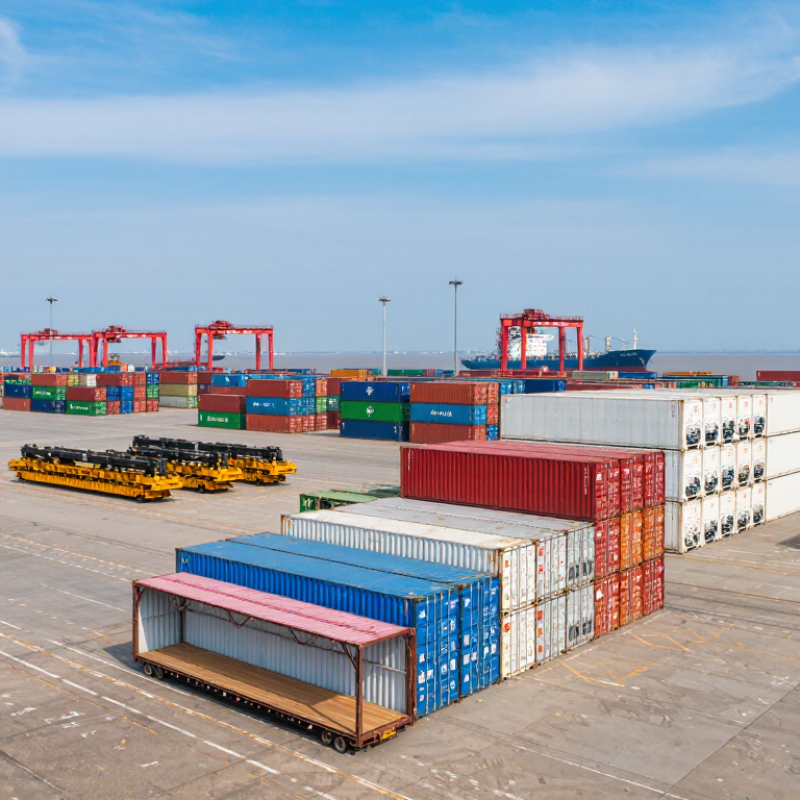
10 Best Shipping And Storage Containers For Global Buyers
Container Types Suitable for Shipping and Storage
Choosing a container starts with the cargo, not the price. UNCTAD’s Review of Maritime Transport reports that over 80% of global merchandise trade moves by sea, making container selection a practical supply-chain decision. Standard dry containers suit boxed goods, machinery, furniture, and sealed pallets. High-cube units add about 30 centimeters of internal height, useful for bulky but lightweight cargo. They also require careful loading plans. More space can encourage unsafe stacking.
Temperature-sensitive products need refrigerated containers, commonly called reefers. These units support chilled or frozen cargo, but their power supply, ventilation, and temperature records require daily attention. Open-top containers help load tall machinery with a crane. Flat-rack containers handle oversized equipment, although securing points and weight distribution become critical. Tank containers are designed for approved liquid cargo and demand specialist inspection. Not every liquid belongs inside one.
Storage needs differ from transport needs. A wind-and-watertight dry container may protect tools on a worksite, but moisture can still form inside during temperature changes. Desiccant bags, raised flooring, and ventilation gaps help, though they are not magic. ISO 668 provides standardized container dimensions, while the International Convention for Safe Containers requires safety inspection and certification. The World Bank’s Logistics Performance Index also shows that reliability depends on handling, infrastructure, and tracking, not only container choice. A perfect container does not fix poor loading. Check payload limits, door clearance, floor condition, route restrictions, and inspection dates before booking.
Container Types Suitable for Shipping and Storage
Typical internal volume is shown in cubic meters. Dry, refrigerated, open-top, and insulated containers are selected according to cargo type, temperature requirements, loading access, and storage conditions. Actual dimensions may vary slightly by ISO specification and container design.
10 Best Shipping And Storage Containers For Global Buyers
Key Specifications Global Buyers Should Compare
Global buyers should compare containers by cargo, route, climate, and handling equipment. UNCTAD’s Review of Maritime Transport 2024 states that over 80% of global merchandise trade by volume moves by sea. Small specification errors can therefore create expensive delays.
Standard dry, high-cube, insulated, refrigerated, open-top, flat-rack, side-opening, tunnel-door, half-height, and tank containers serve different requirements. ISO 668 defines essential external dimensions, while the CSC Convention supports safety approval for international transport. Buyers should verify internal length, width, height, door clearance, tare weight, maximum payload, and corner-post condition. Measure twice.
A high-cube unit offers extra vertical space for bulky cartons. A refrigerated unit requires a stable power supply and a confirmed temperature range. An open-top model suits tall cargo, but its cover and loading method need careful inspection. Flat-racks require accurate lashing points and a clear cargo weight plan. Tank containers must match the permitted product and applicable transport rules.
Moisture protection deserves equal attention. Check floor condition, roof seams, door gaskets, ventilation, and evidence of condensation. The Institute of International Container Lessors highlights inspection and structural maintenance as key factors in container safety. In practical purchasing reviews, a neat spreadsheet can still mislead. A container may meet nominal dimensions yet fail a real loading test. Request recent inspection records, CSC plate details, payload limits, and photographs from several angles. Details matter. (UNCTAD, Review of Maritime Transport 2024; ISO 668; CSC Convention)
For global buyers, the “best” shipping container is the one that matches cargo, route, and compliance duties. Standard dry containers suit general freight, while refrigerated units protect temperature-sensitive goods. Open-top, flat-rack, and tank containers require more careful approval. All units should follow ISO 668 dimensions and ISO 1496 performance requirements. A valid CSC safety plate is essential for international sea transport. It confirms that the container passed structural inspections and periodic examinations.
Safety paperwork matters as much as steel thickness. Under the IMO Verified Gross Mass rule, shippers must provide the container’s accurate loaded weight before vessel loading. Incorrect weights can affect stacking and vessel stability. The World Shipping Council reported 576 containers lost overboard in 2023, from roughly 250 million transported. The number is small, but not meaningless. A damaged door seal, weak floor, or poor lashing decision can create serious exposure. Check corner posts, locking rods, welds, flooring, and roof patches before purchase.
The UNCTAD Review of Maritime Transport 2023 projected global seaborne trade growth of 2.4% in 2023. More movement increases demand for compliant equipment, including used units. Buyers should request inspection records, CSC validity, payload details, and evidence of cleaning. “Cargo worthy” is not always clearly understood. It may depend on the inspector, destination, and intended cargo. A container that looks acceptable in a yard may fail after repeated lifting, salt exposure, or uneven loading. Independent inspection remains a practical safeguard.
| Container Type | Typical External Size | Typical Internal Size | Typical Volume | Typical Maximum Gross Mass | Best Use | Key Safety and Compliance Requirements | Buyer Inspection Priorities |
|---|---|---|---|---|---|---|---|
| 20-Foot General Purpose Dry Container | 6,058 × 2,438 × 2,591 mm | 5,898 × 2,352 × 2,393 mm | Approximately 33.2 m³ | Up to 30,480 kg, subject to the container CSC plate and carrier limits | General cargo, machinery, packaged goods, and long-term storage | ISO 668 dimensional requirements; valid CSC Safety Approval Plate; verified gross mass under SOLAS before ocean loading; cargo securing in accordance with the CTU Code | Check door seals, floor condition, roof integrity, corner posts, locking bars, corrosion, odor, and evidence of water ingress |
| 40-Foot General Purpose Dry Container | 12,192 × 2,438 × 2,591 mm | 12,032 × 2,352 × 2,393 mm | Approximately 67.7 m³ | Up to 30,480 kg, subject to the CSC plate and transport-mode limits | High-volume palletized cargo, cartons, furniture, and non-temperature-sensitive goods | ISO-compatible dimensions; valid CSC approval; SOLAS verified gross mass; proper weight distribution and securing to prevent longitudinal or lateral cargo movement | Confirm usable payload, floor load rating, internal cleanliness, door alignment, structural condition, and compatibility with pallet dimensions |
| 40-Foot High Cube Dry Container | 12,192 × 2,438 × 2,896 mm | 12,032 × 2,352 × 2,698 mm | Approximately 76.4 m³ | Up to 30,480 kg, subject to the CSC plate and carrier limits | Bulky or lightweight cargo requiring extra internal height and volume | ISO 668 dimensional reference; valid CSC plate; SOLAS verified gross mass; cargo must remain within permitted axle, road, rail, and vessel weight limits | Measure door opening and internal height, inspect the taller corner posts and roof, and verify that cargo will not exceed height or center-of-gravity limits |
| 20-Foot Refrigerated Container | Approximately 6,058 × 2,438 × 2,591 mm | Approximately 5,450 × 2,290 × 2,260 mm | Approximately 28.2 m³ | Commonly up to 30,480 kg, subject to the unit CSC plate and carrier limits | Temperature-sensitive food, pharmaceuticals, chemicals, and other controlled-temperature cargo | Valid CSC approval; electrical system suitable for the destination power supply; temperature-control procedures; food or pharmaceutical hygiene rules where applicable; dangerous goods rules when applicable | Test temperature pull-down, controller operation, alarms, drainage, insulation, door gaskets, power cable, ventilation settings, and service records |
| 40-Foot High Cube Refrigerated Container | Approximately 12,192 × 2,438 × 2,896 mm | Approximately 11,590 × 2,290 × 2,540 mm | Approximately 67.5 m³ | Commonly up to 34,000 kg, subject to the CSC plate, carrier, road, and rail limits | Large-volume chilled or frozen cargo requiring controlled airflow and temperature | CSC approval; verified gross mass under SOLAS; documented temperature set point and pre-trip inspection; applicable food, pharmaceutical, electrical, and dangerous goods requirements | Verify usable payload after accounting for the refrigeration unit, airflow clearance, temperature uniformity, alarm history, power requirements, and insulation condition |
| 20-Foot Open-Top Container | Approximately 6,058 × 2,438 × 2,591 mm | Approximately 5,898 × 2,352 × 2,350 mm | Approximately 32.6 m³ | Typically up to 30,480 kg, subject to the CSC plate and carrier limits | Overheight, heavy, or crane-loaded cargo such as stone, timber, scrap, and industrial equipment | Valid CSC plate; tarpaulin or removable-roof system properly secured; lifting and lashing arrangements suitable for the cargo; SOLAS verified gross mass; applicable IMDG rules for dangerous goods | Inspect roof bows, tarpaulin, lashing rings, door headers, floor strength, lifting points, and cargo height clearance |
| 40-Foot Open-Top Container | Approximately 12,192 × 2,438 × 2,591 mm | Approximately 12,032 × 2,352 × 2,350 mm | Approximately 66.5 m³ | Typically up to 30,480 kg, subject to the CSC plate and carrier limits | Long or high cargo that cannot be loaded through standard container doors | CSC approval; secure tarpaulin and roof-bow installation; cargo securing under the CTU Code; verified gross mass under SOLAS; additional controls for hazardous cargo | Confirm removable roof dimensions, lashing capacity, floor condition, door operation, water protection, and compatibility with cranes or top-loading equipment |
| 20-Foot Flat Rack Container | Approximately 6,058 × 2,438 × 2,591 mm | Deck length approximately 5,650 mm; deck width approximately 2,438 mm | Open deck; cargo profile determines usable space | Commonly up to 34,000 kg, subject to the CSC plate and structural rating | Oversized machinery, vehicles, steel products, pipes, and project cargo | Valid CSC plate; rated lashing points; approved cargo-securing plan; verified gross mass under SOLAS; carrier approval for out-of-gauge dimensions and any overwidth or overheight cargo | Check deck strength, twist-lock fittings, end walls, lashing points, dimensional projections, center of gravity, and lifting method |
| 40-Foot Flat Rack Container | Approximately 12,192 × 2,438 × 2,591 mm | Deck length approximately 11,650 mm; deck width approximately 2,438 mm | Open deck; usable space depends on cargo dimensions | Commonly up to 40,000 kg, subject to the CSC plate, vessel position, and transport limits | Large industrial assemblies, construction equipment, transformers, and heavy project cargo | CSC approval; engineered lashing and blocking plan; approved lifting points; SOLAS verified gross mass; route, vessel, and port acceptance for out-of-gauge cargo | Verify platform rating, end-wall condition, twist-lock compatibility, lifting points, cargo overhang, securing angles, and transport-route restrictions |
| 20-Foot ISO Tank Container | Approximately 6,058 × 2,438 × 2,591 mm | Tank length approximately 6,058 mm within the ISO frame | Commonly 14,000–26,000 litres, depending on tank design and product density | Often up to 36,000 kg, subject to the tank data plate, CSC approval, and applicable transport regulations | Bulk liquids, liquefied gases, powders, and hazardous or non-hazardous chemical products | CSC approval; applicable tank design and inspection requirements; IMDG Code for sea transport; ADR/RID or national rules for road and rail; UN specification and pressure-testing requirements where applicable; product-specific safety data | Confirm tank material compatibility, inspection and test dates, pressure rating, valves, fittings, grounding provisions, cleanliness certificate, and required dangerous goods documentation |
| 20-Foot Flexitank-Compatible Dry Container | 6,058 × 2,438 × 2,591 mm | 5,898 × 2,352 × 2,393 mm | Usually designed for approximately 16,000–24,000 litres, depending on the approved flexitank system | Container and liquid payload must remain below the CSC plate, SOLAS, road, rail, and carrier limits | Single-use transport of compatible non-hazardous liquids such as food ingredients and selected industrial liquids | Use only an approved flexitank system and compatible liquid; follow CTU Code securing guidance; comply with carrier acceptance rules, food-contact requirements where applicable, and dangerous goods restrictions | Inspect the container floor and walls, verify flexitank capacity, product compatibility, bulkhead support, valve protection, temperature limitations, loading procedure, and spill-response plan |
10 Best Shipping And Storage Containers For Global Buyers
Choosing among the ten best shipping and storage containers requires more than comparing prices. UNCTAD’s Review of Maritime Transport 2024 reports that maritime transport carries over 80% of global merchandise trade by volume. Small container failures can therefore create serious delays. Check the steel condition, door seals, floor strength, ventilation, and visible corrosion. A container should also match recognized ISO dimensions and display valid safety information. Ask for inspection photographs, not only written promises.
Capacity must fit the cargo, handling equipment, and transport route. A standard 20-foot unit offers roughly 33 cubic meters internally, while a 40-foot unit provides about 67 cubic meters. Actual usable space is lower. Pallets, corner posts, and door clearance consume room. Measure the largest packed item first. Weight matters too. Overloading may create handling risks and additional charges. The World Bank’s Logistics Performance Index 2023 highlights major differences in customs, infrastructure, and delivery reliability across markets.
Total cost includes purchase or rental, ocean freight, inland transport, port handling, storage, insurance, repairs, and possible cleaning fees. Request a landed-cost quotation with every charge listed. Freight rates can change quickly. A cheaper container may need repainting or floor repairs. That saving can disappear. A spreadsheet helps, but it may hide poor assumptions. Recheck currency, delivery distance, and seasonal surcharges before signing. Leave room for mistakes; real logistics rarely follows the first estimate.
Container selection should follow the cargo, route, and storage environment. UNCTAD’s Review of Maritime Transport 2024 states that ships carry over 80% of global merchandise trade by volume. That scale makes small equipment decisions important.
A standard dry container suits cartons, furniture, machinery parts, and sealed pallets. A high-cube model adds useful vertical space for lightweight goods. Check the internal height carefully. It may not fit every pallet configuration.
Oversized machinery needs an open-top or flat-rack container. These units simplify crane loading, but they demand precise lashing plans and weather protection.
Temperature-sensitive food, medicine, and chemicals require refrigerated containers with continuous temperature records. The cold chain is less forgiving. A brief power failure can damage cargo before anyone notices.
For long-term storage, inspect the door seals, floor condition, ventilation, and corrosion. ISO 668:2020 provides standardized container dimensions, yet it does not guarantee a watertight unit.
UNCTAD’s 2023 maritime review highlights persistent disruption risks across major shipping routes. Buyers should therefore verify the container’s inspection plate, payload rating, and recent repair history.
A used container may look sound outside while hiding floor contamination or serious rust. That mistake is costly.
For coastal storage, choose stronger corrosion protection and raise the unit above standing water. For temporary offices, workshops, or archive storage, add ventilation and insulation.
A dry box is not automatically a good warehouse. Some buyers also overestimate high-cube capacity because door clearance reduces practical loading space.
Rob was always very honest and upfront about everything and took the time to explain everything I needed.
“highly recommended. They provided us with a great storage container with ontime services.”
“Bought a used container, its perfect, no leaks and in good condition.”
“Good service and prompt delivery. A great option for temporary storage at a decent price.”

Join our mailing list to get the latest storage container inventory and offers