Choosing Water Treatment Equipment for global sourcing requires more than comparing prices and brochures. Water quality changes by region, season, and industrial process. A system designed for clear municipal water may fail with high iron, salinity, or unstable pressure. The decision should begin with laboratory results, daily flow, peak demand, and the required outlet quality.
Real sourcing experience shows that small details often create expensive problems. A supplier may promise a 100-cubic-meter daily capacity, but operating conditions can reduce that figure. Ask for verified performance data, component specifications, maintenance schedules, and recent reference projects. Check whether membranes, pumps, valves, and control panels are available locally. A low purchase price means little when replacement parts take eight weeks to arrive.
Look beyond the factory visit. Review quality controls, operator training, installation support, and documentation. Certifications can support trust, but they do not replace independent testing or a practical pilot trial. Confirm electrical standards, communication protocols, shipping protection, and wastewater disposal requirements before signing any contract. These checks may feel slow. They prevent avoidable delays.
There is no universally perfect system. Poor source data can lead to an excellent machine being selected for the wrong purpose. Buyers should record assumptions and revisit them after testing. A transparent supplier will discuss limitations, not hide them. With technical review, realistic budgets, and dependable after-sales support, global sourcing becomes a controlled engineering decision rather than a risky online purchase.
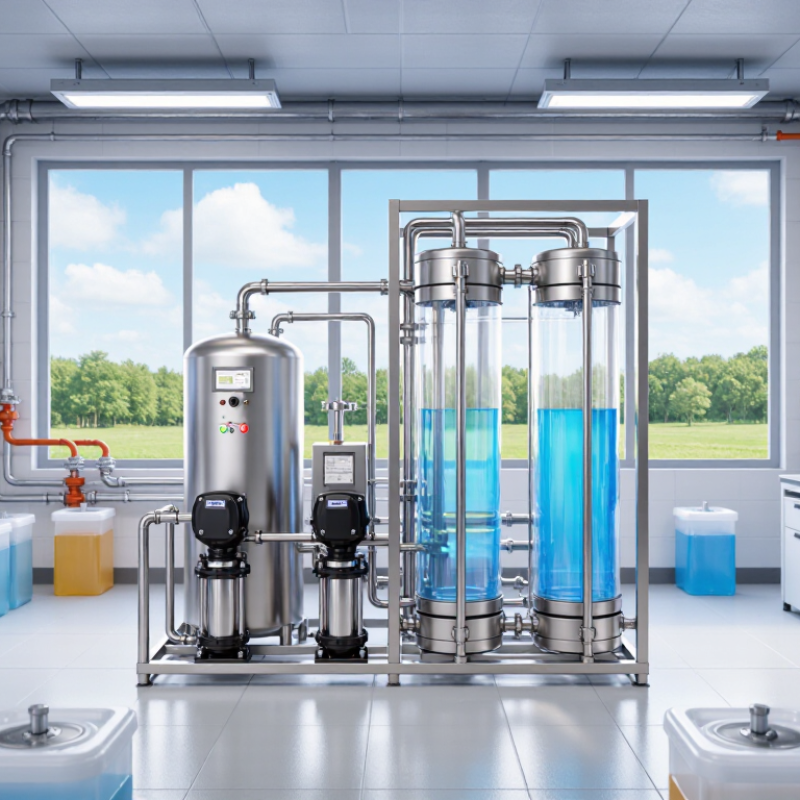
Choosing water treatment equipment starts before comparing quotations. Define the water goal in measurable terms: potable water, process water, boiler feed, or safe discharge. “Clean” is too vague. Set targets for turbidity, hardness, conductivity, microbial indicators, and specific chemicals. A rural facility may need iron removal, while a coastal plant may face high salinity. The end use controls the design.
Standards must be written into the project brief. Identify the destination market, applicable drinking-water or industrial limits, testing methods, and documentation requirements. Ask whether treated water must meet a national regulation, an industry standard, or both. Require verifiable certificates and recent laboratory results, not attractive claims. Leave room for stricter internal limits when production risk is high. Compliance is not a brochure statement.
Source water conditions decide whether equipment performs reliably. Collect samples across different seasons, including after heavy rain or drought. Test pH, temperature, flow, pressure, suspended solids, organics, metals, salts, and microbiological load. Record daily and peak demand, available space, power quality, drainage, and operator skills. A single sample can mislead. Field reviews often reveal designs based on “normal” water, while weekend peaks bring sudden sediment and odor. That mistake is avoidable, but correcting it can be expensive. Source data may still be incomplete. Share it openly with qualified engineers, then compare lifecycle cost, maintenance access, spare parts, and reject-water handling.
Choosing water treatment equipment starts with the contaminant profile, not the equipment catalogue. The WHO and UNICEF Joint Monitoring Programme reported that 2.2 billion people lacked safely managed drinking water in 2022. This pressure makes reliable treatment essential, but water quality still varies sharply between sites.
Coagulation, sedimentation, and media filtration are practical for suspended solids, turbidity, and many microorganisms. They need chemical control and regular backwashing. Activated carbon can reduce taste, odors, pesticides, and some industrial organics. Its performance declines when carbon becomes saturated. Reverse osmosis removes dissolved salts, many metals, and numerous emerging contaminants. However, it consumes more energy and creates a concentrated waste stream. Ion exchange targets hardness, nitrate, and selected ions, but resin regeneration requires careful chemical handling. Ultraviolet treatment can inactivate pathogens without adding chemicals. It cannot remove salts, particles, or most dissolved chemicals.
The International Energy Agency reported that water-related energy use is significant across pumping, treatment, and distribution. Therefore, compare energy demand, recovery rate, maintenance access, and replacement-part availability before global sourcing. Request independent test data under feedwater conditions similar to the installation site. A pilot trial is often wiser than trusting a brochure. I would not select membrane equipment without checking pretreatment quality and concentrate disposal. That is an easy mistake. The best comparison also includes operator training, monitoring instruments, local standards, and realistic service response times. Performance claims can look precise, yet field water rarely behaves perfectly.
| Treatment Technology | Main Treatment Principle | Turbidity & Suspended Solids | Bacteria & Protozoa | Viruses | Dissolved Salts & TDS | Organic Contaminants | Metals & Nutrients | Typical Energy Demand | Key Advantages | Main Limitations | Typical Water Quality Use |
|---|---|---|---|---|---|---|---|---|---|---|---|
| Coagulation and Sedimentation | Coagulants destabilize particles so they form larger flocs that settle by gravity. | High removal when optimized | Partial removal | Limited removal | No significant removal | Some natural organic matter removal | Can remove particle-bound metals and phosphorus | Low | Handles variable raw-water turbidity; suitable for large flow rates. | Requires chemical dosing, sludge handling, and skilled process control. | Municipal drinking-water pretreatment and surface-water clarification. |
| Media Filtration | Water passes through layers of sand, anthracite, gravel, or other granular media. | High removal after clarification | Partial removal | Limited removal | No significant removal | Limited unless special media are used | Limited dissolved-contaminant removal | Low | Simple, durable, and economical for particle reduction. | Backwashing is required; performance declines if the filter is overloaded. | Drinking-water polishing, process-water pretreatment, and irrigation water. |
| Activated Carbon Adsorption | Dissolved contaminants attach to the large internal surface area of activated carbon. | Moderate particle removal with suitable beds | Not a dependable disinfection barrier | Not a dependable virus barrier | Does not remove most inorganic salts | Effective for many tastes, odors, chlorine, and hydrophobic organics | Can reduce some mercury and other adsorbable compounds | Low to medium | Improves taste and odor; useful for many trace organic compounds. | Media eventually saturates and may require replacement or thermal reactivation. | Drinking-water polishing and removal of taste, odor, and selected organics. |
| Ultrafiltration (UF) | Pressure-driven membranes with very small pores retain particles, colloids, and microorganisms. | Very high removal | High removal of bacteria and protozoa | Variable; depends on membrane integrity and virus size | Little removal of dissolved salts | Limited removal of dissolved organics | Little removal of dissolved metals or nutrients | Low to medium | Produces consistent low-turbidity water and has a compact footprint. | Needs pretreatment and periodic cleaning; does not desalinate water. | Drinking-water clarification, wastewater reuse, and RO pretreatment. |
| Nanofiltration (NF) | A tighter membrane process that removes many multivalent ions and organic molecules. | Very high removal | High removal with intact membranes | High removal with intact membranes | Good reduction of hardness and sulfate; partial desalination | Effective for many larger organic molecules | Effective for hardness, sulfate, and selected metals | Medium | Lower pressure than RO for many applications; reduces hardness and color. | Does not remove all monovalent salts; produces a concentrate stream. | Softening, color removal, industrial process water, and selected reuse systems. |
| Reverse Osmosis (RO) | High-pressure membranes reject dissolved ions, microorganisms, and many dissolved contaminants. | Very high removal after pretreatment | High removal with intact membranes | High removal with intact membranes | High removal of TDS and many inorganic ions | Good for many organics; performance varies by compound | High removal of many metals, nitrate, and other ions | Medium to high; higher for seawater | Broad contaminant reduction and reliable production of low-TDS water. | Higher pressure, membrane fouling, concentrate disposal, and possible remineralization needs. | Desalination, boiler feedwater, drinking water, and high-purity industrial water. |
| Ultraviolet (UV) Disinfection | UV light damages the genetic material of microorganisms and prevents replication. | No physical removal | Effective when dose and UV transmittance are adequate | Effective against many viruses at validated doses | No removal | No significant removal | No removal | Low | No chemical residual, rapid treatment, and no significant change in water chemistry. | Requires low turbidity and reliable electrical power; provides no residual protection. | Final disinfection for drinking water, wastewater reuse, and process water. |
| Ozonation | Ozone oxidizes microorganisms, taste-and-odor compounds, and selected organic contaminants. | Limited particle removal | Strong disinfection capability | Effective at validated doses | No significant salt removal | Oxidizes many taste, odor, and color compounds | Can oxidize iron and manganese for subsequent filtration | Medium | Powerful oxidant and disinfectant; improves taste, odor, and color. | Must be generated on site; ozone off-gas control and bromate management may be required. | Surface-water treatment, advanced oxidation, and high-quality reuse applications. |
| Ion Exchange | Resins exchange undesirable ions in water for safer or less problematic ions. | No significant particle removal | No disinfection | No disinfection | Selective removal; not a universal desalination process | Generally ineffective for most organics | Effective for selected ions such as hardness, nitrate, and some metals | Low | Selective and efficient for targeted ionic contaminants. | Resin exhaustion, regeneration chemicals, and brine or spent-resin management are required. | Water softening, nitrate reduction, demineralization, and industrial polishing. |
| Electrocoagulation | Electric current releases coagulant species from sacrificial electrodes to destabilize contaminants. | High for many suspended solids and emulsions | Partial reduction | Not normally a stand-alone virus barrier | Limited dissolved-salt removal | Can reduce oils, emulsions, and selected organics | Can remove certain metals and phosphorus | Medium | Can reduce chemical coagulant handling and treat difficult industrial wastewaters. | Electrode consumption, electrical control, sludge production, and scale formation may occur. | Industrial wastewater, oily water, and difficult-to-coagulate streams. |
How to Choose Water Treatment Equipment for Global Sourcing?
Equipment selection should begin with real operating data, not a supplier’s largest capacity claim. Record daily flow, peak demand, water temperature, and seasonal changes. A system rated for 100 cubic meters daily may struggle during a 30% production surge. Leave practical headroom, but avoid excessive capacity that increases purchase and energy costs. Small tests with representative water samples can reveal fouling risks early.
Materials must match the water chemistry and the installation environment. Stainless steel, coated carbon steel, and engineered plastics behave differently under high salinity, acidity, or disinfectant exposure. Ask for material certificates and inspect welds, seals, and internal surfaces. In humid coastal warehouses, even external frames need careful corrosion protection. I have seen polished equipment fail because one inexpensive gasket was chemically unsuitable.
Energy use deserves more than a motor-efficiency label. Compare pump power, pressure requirements, standby consumption, and cleaning cycles. Request operating data at actual flow rates. Maintenance planning is equally practical: check access around filters, lifting space, spare-part availability, and technician training. A compact unit may fit the floor plan but create awkward servicing. That mistake is easy to make. Build a maintenance schedule around local skills, water quality, and realistic replacement intervals. Supplier documentation should state testing methods, assumptions, and performance limits clearly.
Representative engineering values for common treatment equipment. Capacity is shown as the midpoint of a typical equipment range; energy use is shown per cubic metre of treated water.
Energy figures are typical operating ranges reported for properly designed systems and vary with feedwater quality, pressure, recovery, automation, and local operating conditions.
Supplier verification should begin before comparing equipment prices. Request business registration records, factory addresses, recent project references, and production photographs. A polished certificate is not proof of current quality. Check certificate numbers with the issuing organization whenever possible. Review the scope carefully, because a certificate may cover only one component. I also recommend a live factory video tour or an independent site audit. Small details matter, such as labeled test instruments, clean assembly areas, and traceable inspection records.
Customization must match the water, not just the buyer’s preferred layout. Share laboratory results, flow rates, operating hours, available power, and installation limits. Ask for process calculations and a clear list of included parts. For example, confirm membrane housing material, control panel standards, dosing ranges, and sensor accuracy. A supplier should explain what changes affect price or delivery time. Vague promises create expensive surprises. I have seen technically attractive proposals fail because the feed-water analysis was incomplete. That mistake deserves attention.
After-sales support needs written evidence. Confirm commissioning procedures, remote troubleshooting methods, spare-parts availability, and technician response times. Ask whether manuals include wiring diagrams and maintenance intervals. A practical supplier can provide operator training and a fault-reporting process. Request warranty terms in plain language. “Fast support” is too vague. Define hours and channels. No checklist is perfect. Cultural differences, shipping delays, and unclear responsibilities can still cause trouble. A trial order, factory acceptance test, and documented handover reduce that risk. Still, I would leave room for questions after installation. Experiences in the field often reveal problems no quotation can show.
Purchase price is only the visible part of equipment cost. Include freight, insurance, customs fees, spare parts, training, and local commissioning. The World Bank reports that poor water management can reduce economic growth sharply in water-stressed regions. This makes lifecycle planning essential, not optional. I once compared two systems using only supplier quotations. That estimate was wrong. A cheaper unit required more chemical dosing and frequent membrane replacement.
Import requirements can change the real project budget. Confirm the correct HS classification, electrical voltage, frequency, pressure ratings, and documentation before ordering. Ask for test certificates, material records, operating manuals, and maintenance instructions. Local authorities may also require specific discharge or drinking-water approvals. Requirements differ between countries. A customs delay can leave expensive equipment standing in a warehouse.
Installation details deserve equal attention. Check foundation loads, pipe connections, drainage, ventilation, and technician access. The International Energy Agency estimates that the water sector consumes about 4% of global electricity. Therefore, pump efficiency and control settings influence long-term operating costs. Compare energy use per cubic metre, chemical consumption, expected membrane life, and annual service hours.
The United Nations World Water Development Report 2024 also highlights growing pressure on water resources. Designing for future demand matters. Still, projected demand is uncertain. Avoid paying for oversized capacity without reliable local data. A practical evaluation should compare five-year and ten-year costs, not only the invoice total.
Rob was always very honest and upfront about everything and took the time to explain everything I needed.
“highly recommended. They provided us with a great storage container with ontime services.”
“Bought a used container, its perfect, no leaks and in good condition.”
“Good service and prompt delivery. A great option for temporary storage at a decent price.”

Join our mailing list to get the latest storage container inventory and offers