Blogs | Great Lakes Kwik Space

How to Choose the Right Mobile Container for Your Business

Choosing the right Mobile Container begins with a practical question: what must the unit protect, carry, or support? A retail company may need clean presentation and electrical access. A contractor may need reinforced floors, lockable doors, and rapid relocation. A warehouse operator may prioritise internal volume, loading height, and delivery access. Small differences matter.

UNCTAD’s Review of Maritime Transport reports that over 80% of global merchandise trade by volume moves by sea. That scale explains why container standards influence mobile storage and temporary workspace design. ISO 668 also defines standard container dimensions and ratings, supporting safer planning across suppliers. Grand View Research’s market analysis further identifies growing demand for portable storage and modular space solutions. These reports offer useful direction, but they cannot choose the unit for you.

Marc Levinson, a respected container-industry historian, wrote, “The container made shipping cheap enough to make it economical to manufacture goods in one country and sell them in another.” His observation also applies to mobile business infrastructure: standardisation creates flexibility, but the business context remains decisive.

Measure the goods first. Check payload, internal height, ventilation, insulation, flooring, and door clearance. Confirm the delivery route, crane requirements, and ground stability. A container that fits on paper may fail beside a narrow gate or uneven loading area. Security ratings deserve attention too.

Do not overbuy.

The cheapest quote may exclude transport, installation, maintenance, or return charges. Some businesses also underestimate condensation and poor airflow. That mistake can damage stock quietly. This guide compares Mobile Container types, materials, costs, and operational details, helping you make a better decision—even when the perfect option does not exist.
How to Choose the Right Mobile Container for Your Business

Understanding Mobile Container Types and Their Business Uses

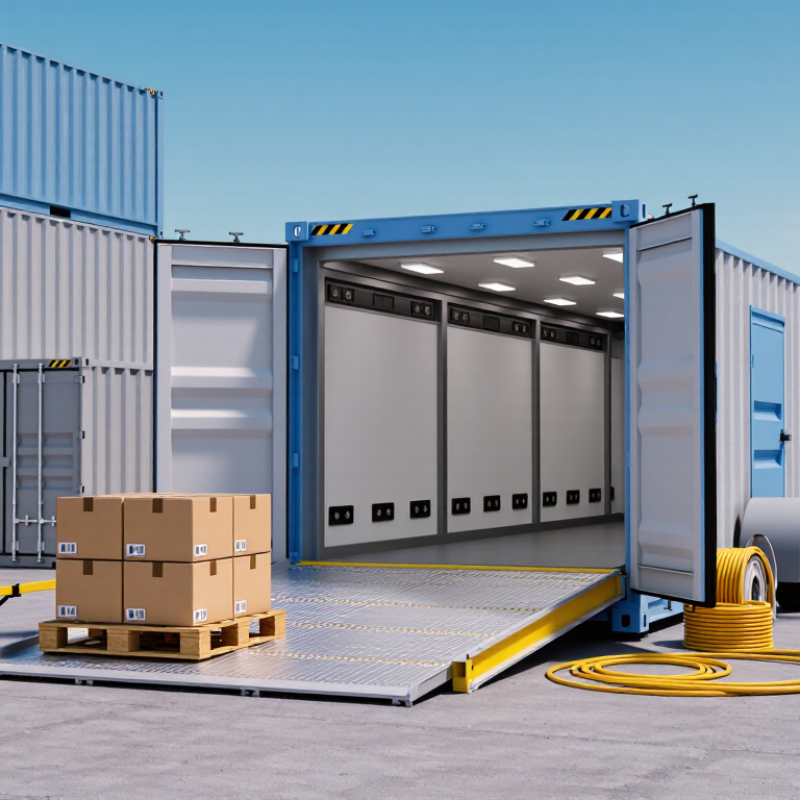
Choosing a mobile container starts with its job, not its appearance. Standard dry containers suit tools, packaged goods, and temporary inventory. Their steel walls protect cargo from rain and impact. Refrigerated containers support food, medicine, and temperature-sensitive materials. Open-side units help teams load bulky equipment quickly. Office and workshop containers add lighting, insulation, power, and secure access.

The scale is significant. UNCTAD’s Review of Maritime Transport 2023 states that shipping carries over 80% of global merchandise trade by volume. That dependence makes container compatibility important. ISO 668 dimensions help businesses plan transport, stacking, and handling. However, standard sizes do not solve every site problem. A refrigerated unit needs stable electricity, airflow, and temperature monitoring. A workshop unit needs cable routing, ventilation, and safe floor loading. Check the delivery route carefully. A narrow gate can defeat an otherwise suitable choice.

I have seen poor planning focus only on monthly rental cost. That is a costly shortcut. The World Bank’s Logistics Performance Index 2023 highlights reliability, tracking, and infrastructure as key logistics factors. Your container decision should reflect those realities. Measure the ground, turning space, door clearance, and expected loading method. Ask whether staff will enter daily or only retrieve stock weekly. Also consider condensation, especially when warm air meets cold steel. My own preference is to document these assumptions before ordering. They are often incomplete. A small site trial may reveal more than a polished specification sheet.

Defining Your Space, Capacity, and Mobility Requirements

Choosing a mobile container starts with defining the space it must serve. Measure the work area, access routes, and clearance above doors. A unit may fit on paper yet fail beside a loading bay. I have seen teams forget the turning radius for delivery vehicles. That mistake created costly delays.

List every item that will enter the container. Record its dimensions, weight, and required working clearance. Then separate storage from active workspace. Shelves, benches, lighting, and safety paths consume capacity quickly. Leave room for people to move. A packed container is rarely efficient.

For temperature-sensitive materials, document ventilation and insulation needs before selecting the structure. Capacity should support daily work, not only maximum inventory. My first layout estimate was too optimistic. Cardboard floor markings exposed the problem.

Mobility requirements deserve equal attention. Decide how often the container will move, which surfaces it will cross, and who will reposition it. Frequent relocation may require lighter equipment and stronger securing plans. A unit used on uneven ground needs stable placement points. Check lifting, towing, and vehicle access at every site. Also plan for power connections, weather changes, and temporary storage during relocation. Ask operators to test the proposed layout. Their feedback often reveals blocked doors or unsafe reach zones. Plans improve when assumptions are challenged.

Comparing Materials, Features, and Customization Options

Material choice affects a mobile container’s weight, service life, and maintenance demands. Steel offers strong impact resistance and supports heavier equipment. Aluminum reduces transport weight and resists corrosion in many environments. Composite panels can improve insulation, but damaged sections may require specialized repairs. Consider the container’s route, climate, floor loading, and cleaning routine before choosing.

Features should match daily work rather than look impressive on a specification sheet. Check door width, locking points, ventilation, drainage, lighting, and internal tie-down rails. A smooth floor helps with cleaning. Reinforced corners matter when containers are moved frequently. Ask for load ratings, material thicknesses, test records, and maintenance guidance. Reliable documentation often reveals more than polished sales language.

Customization can include shelving, partitions, ramps, power access, temperature control, and exterior graphics. Plan these details around actual workflows. Measure the largest item, then leave room for safe handling. Too much built-in equipment adds weight and reduces flexibility. Too little creates clutter. That balance is easy to misjudge. A trial layout using cardboard or temporary shelving can expose awkward movements before fabrication begins. Review the design after a short operating period, because users often discover needs that were invisible on the drawing.

How to Choose the Right Mobile Container for Your Business - Comparing Materials, Features, and Customization Options

Comparison Factor HDPE / Polyethylene Galvanized Steel Aluminum Fiberglass-Reinforced Plastic
Typical empty weight for a 1,000 L unit Approximately 45–80 kg Approximately 120–250 kg Approximately 70–150 kg Approximately 80–170 kg
Common mobile capacity range 200–5,000 L 500–20,000 L 500–10,000 L 500–15,000 L
Approximate operating temperature About −40°C to 60°C, depending on grade and load About −40°C to 200°C, depending on lining, seals, and fittings About −40°C to 150°C, depending on alloy and seals About −30°C to 120°C, depending on resin system
Corrosion resistance Excellent; does not rust and resists many chemicals Good; zinc coating can be damaged by abrasion or harsh chemicals Very good; vulnerable to some alkaline and galvanic environments Excellent; resin must be selected for the specific chemicals
Impact resistance High; flexible and resistant to dents High; strong but may dent or deform under heavy impact Moderate to high; lighter sections can dent Moderate; rigid but can crack under severe impact
Weight efficiency Excellent; easiest to move when empty Low; requires stronger wheels, frames, or lifting equipment Very good; strong-to-weight ratio Good; lighter than steel but heavier than many plastic designs
Typical mobility options Integrated pallet base, caster frame, hand truck pockets, towable chassis Forklift pockets, lifting lugs, heavy-duty caster frame, trailer mounting Caster frame, forklift pockets, lifting lugs, lightweight trailer mounting Skid base, caster frame, lifting points, trailer mounting
Cleaning and maintenance Easy to wash; inspect for UV aging, deformation, and seal wear Inspect coating, welds, seams, and corrosion-prone areas Easy to clean; inspect for dents, galvanic corrosion, and fastener wear Smooth surfaces are easy to clean; inspect for cracks, blisters, and delamination
Insulation potential Good; low thermal conductivity, but insulation may still be required Low; usually needs insulated walls or a double-wall design Low; conducts heat readily without insulation Good; lower thermal conductivity than metal
Customization flexibility Color, molded openings, threaded fittings, level indicators, labels, and custom lids Welded ports, insulation, internal liners, doors, baffles, coatings, and structural frames Welded fittings, lightweight frames, access panels, insulation, and custom supports Molded shapes, integrated channels, access ports, liners, insulation, and custom frames
Best suited for Water, nonflammable chemicals, food-related handling, agriculture, and general liquid storage Heavy-duty industrial liquids, high mechanical loads, and applications requiring rigid construction Portable equipment, transport-sensitive operations, marine use, and weight-conscious installations Corrosive environments, water treatment, industrial processing, and outdoor installations
Relative initial cost Low to medium Medium Medium to high Medium to high
Main limitation Not suitable for every solvent, high-temperature service, or pressure containment Heavy; coating damage and unsuitable chemical exposure can lead to corrosion Higher material cost and possible galvanic corrosion with dissimilar metals Repairing structural cracks can be more difficult than repairing metal
Selection checklist: Confirm the container's capacity, filled weight, center of gravity, mobility method, chemical compatibility, operating temperature, UV exposure, ventilation requirements, and applicable transport or safety regulations before ordering. The ranges shown are typical design values; the final specification depends on the container geometry, wall thickness, fittings, lining, and intended service.

Evaluating Costs, Regulations, Safety, and Maintenance Needs

How to Choose the Right Mobile Container for Your Business

Choosing a mobile container starts with total cost, not the quoted shell price. Budget delivery, crane placement, permits, foundations, insulation, electrical work, insurance, and future relocation. A low purchase price can hide expensive site preparation. The World Bank’s 2023 Logistics Performance Index used 4,090 survey responses across 139 economies. Its findings reinforce the value of predictable clearance and documentation. Ask whether dimensions, markings, and transport paperwork fit every route. Convenience is not guaranteed.

Regulations depend on use and location. For international movement, verify a valid CSC safety plate under the IMO’s International Convention for Safe Containers. Local planning, fire, electrical, accessibility, and lifting rules may also apply. For United States road transport, confirm cargo securement requirements under 49 CFR Part 393. Safety deserves practical testing. The Bureau of Labor Statistics recorded 885 fatal workplace falls, slips, and trips in 2023. Use nonslip flooring, guarded steps, lighting, ventilation, and clear emergency access. I would not approve a unit from photographs alone.

Maintenance needs should be priced before signing. Inspect door seals, roof seams, welds, locks, floor damage, corrosion, drainage, and ventilation. Record serial details and schedule inspections after severe weather or relocation. A simple log reduces missed repairs, but it is not foolproof. Keep spare seals and corrosion treatment available. Ask for inspection records, load limits, electrical test results, and repair history. Then compare expected downtime against rental or replacement costs. The spreadsheet may still be wrong. That is why a site walk and independent inspection matter.

How to Choose the Right Mobile Container for Your Business

Comparing typical purchase prices and annual maintenance costs by container type

How to read this chart: Standard dry containers generally provide the lowest entry and maintenance costs. Refrigerated containers cost more because of cooling equipment, electrical requirements, and specialist servicing. Modular office units typically require higher upfront investment but may provide better workplace functionality and insulation.

Regulations and safety: Before purchase, confirm local planning permits, fire and electrical-code requirements, lifting and transport rules, ventilation, emergency exits, structural condition, and weatherproofing. Maintenance budgets should include inspections, corrosion control, door-seal replacement, electrical checks, and equipment servicing where applicable.

Values are indicative midpoint estimates based on common U.S. market ranges for new or refurbished units. Actual costs vary by size, condition, delivery distance, customization, climate, and local regulations.

Selecting a Supplier and Planning Deployment for Long-Term Use

How to Choose the Right Mobile Container for Your Business

Selecting a mobile container begins with your operating needs, not a supplier’s catalogue. Measure the equipment, aisle width, door access, and expected storage load. A workshop may need ventilation, power points, and reinforced flooring. A seasonal site may value quick relocation more than interior customization.

Choose a supplier that can explain materials, load ratings, weather resistance, and maintenance requirements clearly. Ask for drawings, inspection records, delivery procedures, and references from similar projects. Reliable suppliers should discuss weak points, not only attractive features. Check weld quality, locking systems, roof drainage, and floor condition before signing. The lowest quote can become expensive after repairs. I once underestimated delivery access, and a narrow gate delayed installation by two days.

Deployment planning should include the route, lifting equipment, ground condition, and final positioning. Leave enough clearance for doors, vehicles, and future servicing. Confirm who prepares the foundation and who handles installation. Mark the container location on a simple site plan. Small details matter.

Create a maintenance schedule for hinges, seals, locks, electrical fittings, and corrosion. Record inspections with dates and photographs. Train staff to report water leaks or unusual movement immediately. A pilot deployment can reveal practical problems before wider rollout. It may feel slower, but it exposes assumptions early. Long-term planning is rarely perfect; real sites change, and your container strategy should change with them.

Highly Trusted Local Portable Storage Solutions Since 1990

Rob was always very honest and upfront about everything and took the time to explain everything I needed. 

Nayla gamez awesome

“highly recommended. They provided us with a great storage container with ontime services.”

Carlos Montano

“Bought a used container, its perfect, no leaks and in good condition.”

Dudley Pankoke

“Good service and prompt delivery. A great option for temporary storage at a decent price.”

Joe Ward

Portable Storage FAQ

CLICK HERE

Storage Container News

CLICK HERE

Join our mailing list to get the latest storage container inventory and offers