Selecting the best Permanent Magnet Air Compressor in 2026 requires more than comparing motor efficiency. Plant conditions matter. Duty cycle, pressure demand, ambient temperature, and maintenance access can change the result.
The U.S. Department of Energy reports that compressed air may consume about 10% of industrial electricity. Its compressed air guidance also estimates that leaks can waste 20% to 30% of system output. These figures explain why variable-speed permanent magnet machines attract attention. Their motors can reduce slip losses and respond more closely to changing demand. However, savings are not automatic. Poor pipe sizing, dirty filters, and excessive pressure can erase the advantage.
Ron Marshall, an industrial compressed-air specialist, offers a practical warning: “Compressed air is not free.” That sentence deserves attention. A factory may hear only a quiet motor, yet electricity is still leaving the meter. MarketsandMarkets’ 2024 industrial air compressor research identifies energy efficiency, variable-speed operation, and lifecycle cost as major purchasing drivers. The U.S. DOE and CAGI also emphasize system measurement, verified performance, and leak management.
This guide compares oil-injected, oil-free, fixed-speed, and variable-speed Permanent Magnet Air Compressor types. It considers efficiency, air quality, noise, service requirements, and total ownership cost. Real operating data should guide the final choice. Marketing claims alone are not enough. A compressor that performs brilliantly at 50% load may disappoint under constant full-load production. That uncomfortable detail is easy to overlook.
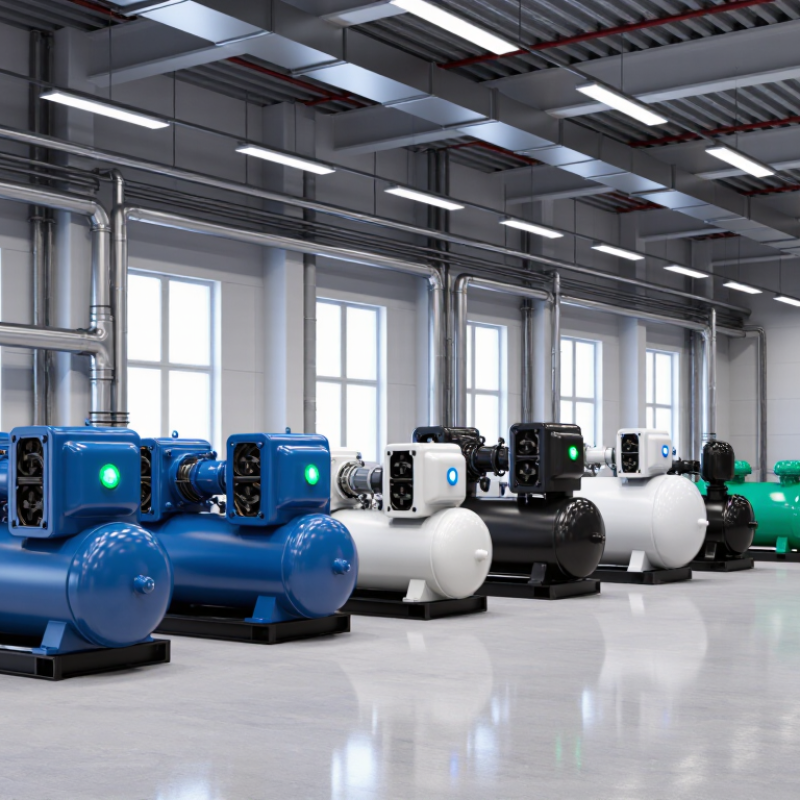
Best Permanent Magnet Air Compressor Types in 2026?
What Is a Permanent Magnet Air Compressor?
A permanent magnet air compressor uses a motor with embedded magnets. The magnets create rotation without induction slip. This design usually drives a rotary screw compressor through variable-speed control. Many models also use direct drive, reducing belt losses and maintenance points.
The motor adjusts speed as air demand changes. That matters because factories rarely consume air at one steady level. The U.S. Department of Energy’s Improving Compressed Air System Performance sourcebook reports that compressed air may consume 10% or more of industrial electricity. It also identifies leaks as a common source of waste, sometimes reaching 20–30% of compressor output. Permanent magnet technology can reduce part-load losses, but savings depend on pressure settings, operating hours, and maintenance. The label alone proves little.
Tips: Check measured demand before choosing a compressor. Ask for performance data at 25%, 50%, and 75% load. Inspect the receiver tank, filters, and pipework too. A highly efficient motor cannot repair a leaking distribution system.
In 2026, the most practical types include permanent magnet rotary screw compressors, oil-free permanent magnet units, and integrated variable-speed systems. Oil-free designs suit sensitive production, but they may require stricter servicing. Rotary screw models often fit continuous industrial workloads. Reciprocating designs can serve intermittent demand, though permanent magnet versions are less common. Select by duty cycle, air quality, pressure stability, and verified ISO 1217 test results. That last check is easy to overlook.
| Compressor Type | Compression Element | Typical Pressure Range | Typical Airflow Range | Oil-Free Availability | Main Advantages | Important Limitations | Best-Fit Applications |
|---|---|---|---|---|---|---|---|
| Permanent Magnet Rotary Screw | Two intermeshing helical rotors, usually driven by a permanent magnet motor with variable-speed control. | Approx. 5–16 bar(g); higher-pressure configurations are available. | Approx. 0.5–30 m³/min, depending on motor size, pressure, and package design. | Available Oil-injected and oil-free designs exist. | Strong choice for continuous operation; smooth airflow; wide capacity range; efficient part-load performance when correctly controlled; compact integrated packages. | Oil-injected versions require filtration and oil maintenance. Efficiency can decline if operated far below the designed pressure and flow range. | Factories, assembly lines, packaging, general manufacturing, workshops, and plants with changing compressed-air demand. |
| Permanent Magnet Oil-Free Screw | Dry screw rotors compress air without oil in the compression chamber; timing gears or other non-contacting arrangements maintain rotor clearance. | Approx. 5–10 bar(g) for many standard industrial models. | Approx. 1–25 m³/min, depending on the model and operating pressure. | Yes Designed to deliver technically oil-free compressed air. | Suitable where air contamination must be minimized; combines variable-speed control with oil-free compression; avoids compressor-oil carryover from the compression chamber. | Usually has a higher purchase price and may require specialized maintenance. Discharge temperature and rotor-coating condition require attention. | Food and beverage, pharmaceutical production, electronics, medical manufacturing, textiles, and other sensitive processes. |
| Permanent Magnet Scroll | Two spiral scrolls compress air through progressively smaller pockets; one scroll orbits while the other remains fixed. | Approx. 3–10 bar(g), depending on the configuration. | Approx. 0.1–3 m³/min per unit; multiple scroll modules can be combined. | Yes Oil-free scroll designs are widely used. | Low vibration and noise; relatively simple air path; well suited to clean, intermittent, and low-to-medium flow requirements; modular redundancy is possible. | Less suitable for very large airflow requirements. Scroll tips and seals are wear components, and performance is sensitive to unsuitable operating conditions. | Dental and medical air, laboratories, small cleanrooms, light manufacturing, and low-noise installations. |
| Permanent Magnet Reciprocating | A piston compresses air inside a cylinder and is driven by a permanent magnet motor, commonly with fixed-speed or variable-speed control. | Approx. 6–30 bar(g), with high-pressure versions available. | Approx. 0.01–2 m³/min per compressor, depending on cylinder size and speed. | Available Oil-free and lubricated designs are both used. | Good for high pressure at relatively low flow; suitable for intermittent service; generally easy to understand and maintain. | Pulsating airflow, higher vibration and noise than screw or scroll designs, and more reciprocating wear parts. Continuous heavy-duty service may require additional cooling and maintenance. | Portable equipment, laboratories, workshops, high-pressure air systems, instrumentation, and occasional-duty applications. |
| High-Speed Permanent Magnet Centrifugal | A high-speed impeller raises air velocity and converts it into pressure; the impeller may be directly driven by a permanent magnet motor. | Approx. 2–10 bar(g), commonly using multiple stages for higher pressure. | Approx. 20–300+ m³/min, depending on the number of stages and system design. | Yes Oil-free compression is typical. | Very high airflow; oil-free air path; low mechanical contact; efficient for stable, large-scale demand; reduced consumable requirements. | Requires a relatively steady operating point and careful surge control. It is generally unsuitable for small or highly fluctuating demand without adequate controls or storage. | Large factories, utilities, wastewater aeration, petrochemical facilities, steel plants, and high-volume process-air systems. |
| Permanent Magnet Vane / Rotary Vane | An eccentrically mounted rotor with sliding vanes traps and compresses air in rotating chambers. | Approx. 2–10 bar(g), depending on whether the unit is configured for pressure or vacuum service. | Approx. 0.05–10 m³/min. | Limited Oil-lubricated designs are common; oil-free variants are application-specific. | Compact construction; steady airflow; suitable for moderate flow and compact equipment; can operate in pressure or vacuum applications. | Vanes and chamber surfaces experience wear. High-temperature operation, dust, and poor filtration can shorten service life. | Packaging machinery, conveying, small automation systems, vacuum lifting, and compact industrial equipment. |
Rob was always very honest and upfront about everything and took the time to explain everything I needed.

“highly recommended. They provided us with a great storage container with ontime services.”
“Bought a used container, its perfect, no leaks and in good condition.”
“Good service and prompt delivery. A great option for temporary storage at a decent price.”