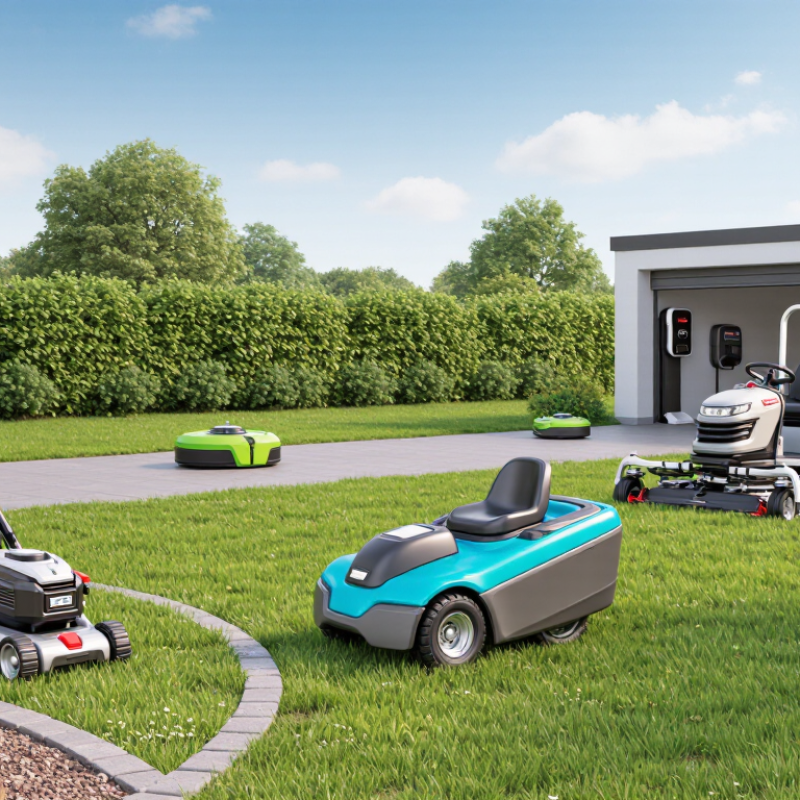
| Compact Push Mower | Small gardens and narrow urban lawns; generally suitable for areas up to about 300 m², depending on grass density and terrain. | Usually a removable lithium-ion battery in the approximately 18–40 V class. | 30–40 cm | Approximately 20–45 minutes per charged battery under ordinary conditions. | Remove the battery before clearing grass or inspecting the blade. Keep hands and feet away from the cutting deck and use the safety key or control as designed. | Clean the deck after use, inspect the blade, keep ventilation openings clear, and store the battery in a cool, dry location. | Useful where storage is limited and local lawns are small. Check charger plug configuration, local voltage compatibility, spare-battery availability, and regional electrical compliance markings. |
| Standard Push Mower | General residential use; commonly chosen for lawns of about 300–700 m², subject to cutting height, grass moisture, and slope. | Often a removable lithium-ion battery in the approximately 36–60 V class, or a dual-battery configuration. | 40–48 cm | Approximately 30–60 minutes per charge; dense or wet grass can reduce this figure. | Use eye protection when mowing near loose objects. Do not mow wet slopes unless the operating instructions specifically permit it, and keep bystanders away from the discharge area. | Sharpen or replace the blade when cutting quality declines, check fasteners, clean the deck, and follow the specified battery-storage charge level. | A versatile choice for many temperate markets. In hot regions, prioritize battery thermal protection and shaded storage; in humid regions, prioritize corrosion-resistant deck materials and dry storage. |
| Self-Propelled Mower | Medium to large residential lawns, uneven ground, or users who prefer powered forward movement; commonly suitable for about 500–1,000 m² with additional batteries. | Usually a higher-capacity lithium-ion system, commonly around 36–80 V, with one or more battery slots. | 46–53 cm | Approximately 25–60 minutes per charge because propulsion consumes additional energy. | Disengage the drive system before reversing or crossing non-grass surfaces. Use the recommended speed on slopes and remove the battery before maintenance. | Inspect drive wheels, belts or gears where fitted, blade condition, grass buildup, and the self-propel mechanism. Keep the drive controls clean and dry. | Well suited to larger or sloped properties, but it is heavier and usually more expensive. Confirm maximum recommended slope, handle-folding dimensions, and local service support before purchase. |
| Battery Riding Mower | Large private lawns and light-duty grounds maintenance, often above 1,000 m² where walking would be inefficient. | Multiple lithium-ion packs or a high-capacity integrated battery system; voltage and capacity vary considerably by design. | 76–107 cm | Approximately 45–120 minutes, depending on deck width, terrain, grass height, and battery capacity. | Use the seat switch, parking brake, blade disengagement, and reverse-operation controls correctly. Avoid steep slopes, obstacles, and wet conditions outside the operating limits. | Clean the cutting deck, inspect tires and steering, check blade balance, maintain battery connections, and follow the charging and storage schedule. | Consider transport width, garage access, local repair capability, import duties, and whether replacement batteries can be shipped legally and economically to the destination country. |
| Robotic Cordless Mower | Maintained lawns where automated, frequent cutting is preferred; capacity varies from small gardens to larger areas depending on the model and boundary layout. | Typically a compact lithium-ion battery with an automatic docking and charging station. | 16–30 cm | Usually operates in repeated short sessions; a single session may last about 45–120 minutes, followed by automatic recharging. | Verify lift, tilt, collision, blade-stop, boundary, and theft-protection functions. Keep children and pets away during operation and secure the boundary wire or navigation area. | Clean the underside and wheels, inspect small blades, clear the docking area, check boundary equipment, and update settings only through approved procedures. | Best on relatively clear lawns with manageable slopes. Check local requirements for outdoor electrical equipment, cellular connectivity, radio features, rain operation, and installation around ponds or garden edges. |
| Commercial-Grade Walk-Behind Mower | Landscaping contractors, institutions, and property managers requiring longer operating periods and robust construction. | High-capacity removable or modular lithium-ion battery packs, often with rapid-charging options. | 51–61 cm | Approximately 30–90 minutes per battery set, depending on deck width, blade speed, and workload. | Use documented operator training, hearing and eye protection where appropriate, lockout procedures during servicing, and controlled transport of batteries. | Use a scheduled inspection program covering blades, handles, wheels, electrical connectors, battery condition, and charger cables. Keep maintenance records for fleet use. | Evaluate total operating cost, replacement-battery logistics, charger infrastructure, worker-safety rules, warranty terms, and local recycling or take-back arrangements for used batteries. |